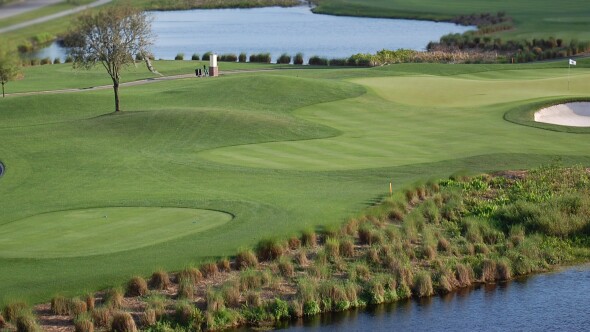
Grand Cypress Golf Club - Links Course

Rating Snapshot


About
Formerly known as The New Course at Grand Cypress Golf.
| Tee | Par | Length | Rating | Slope |
|---|---|---|---|---|
| Blue | 72 | 6773 yards | 71.9 | 121 |
| Blended 1 | 72 | 6394 yards | 70.4 | 117 |
| Blended 1 (W) | 72 | 6394 yards | 76.4 | 127 |
| White | 72 | 6098 yards | 69.0 | 115 |
| White (W) | 72 | 6098 yards | 74.7 | 124 |
| Blended 2 | 72 | 5718 yards | 67.0 | 110 |
| Blended 2 (W) | 72 | 5718 yards | 71.5 | 118 |
| Red | 72 | 5218 yards | 69.2 | 112 |
| Hole | 1 | 2 | 3 | 4 | 5 | 6 | 7 | 8 | 9 | Out | 10 | 11 | 12 | 13 | 14 | 15 | 16 | 17 | 18 | In | Total |
|---|---|---|---|---|---|---|---|---|---|---|---|---|---|---|---|---|---|---|---|---|---|
| Blue Long M: 71.9/121 | 362 | 514 | 179 | 440 | 413 | 496 | 198 | 440 | 382 | 3424 | 330 | 430 | 227 | 453 | 371 | 570 | 190 | 485 | 371 | 3427 | 6851 |
| Blue Short M: 71.0/119 | 362 | 514 | 179 | 440 | 393 | 496 | 182 | 440 | 382 | 3388 | 330 | 430 | 207 | 431 | 371 | 570 | 190 | 485 | 371 | 3385 | 6773 |
| Blended 1 M: 70.4/117 W: 76.4/127 | 362 | 456 | 147 | 440 | 368 | 496 | 164 | 425 | 382 | 3240 | 330 | 387 | 189 | 389 | 371 | 544 | 171 | 485 | 371 | 3237 | 6477 |
| White M: 69.0/115 W: 74.7/124 | 347 | 456 | 147 | 406 | 368 | 465 | 164 | 425 | 322 | 3100 | 275 | 387 | 189 | 389 | 323 | 544 | 171 | 453 | 350 | 3081 | 6181 |
| Blended 2 M: 67.0/110 W: 71.5/118 | 347 | 456 | 147 | 329 | 368 | 427 | 132 | 340 | 322 | 2868 | 275 | 387 | 158 | 296 | 323 | 491 | 136 | 453 | 350 | 2869 | 5737 |
| Red W: 69.2/112 | 332 | 383 | 116 | 329 | 304 | 427 | 132 | 340 | 309 | 2672 | 252 | 301 | 158 | 296 | 291 | 491 | 136 | 410 | 307 | 2642 | 5314 |
| Handicap | 13 | 7 | 15 | 3 | 5 | 9 | 17 | 1 | 11 | 10 | 6 | 8 | 4 | 12 | 2 | 18 | 16 | 14 | |||
| Par | 4 | 5 | 3 | 4 | 4 | 5 | 3 | 4 | 4 | 36 | 4 | 4 | 3 | 4 | 4 | 5 | 3 | 5 | 4 | 36 | 72 |
| Handicap (W) | 3 | 9 | 17 | 7 | 13 | 5 | 15 | 1 | 11 | 10 | 6 | 16 | 8 | 14 | 2 | 18 | 4 | 12 |
Course Details
Rentals/Services
Practice/Instruction
Policies
Food & Beverage
Bar, RestaurantAvailable Facilities
Clubhouse, Meeting Facilities, Banquet FacilitiesReviews
Reviewer Photos
-
Photo submitted by GSwag on 12/08/2018
-
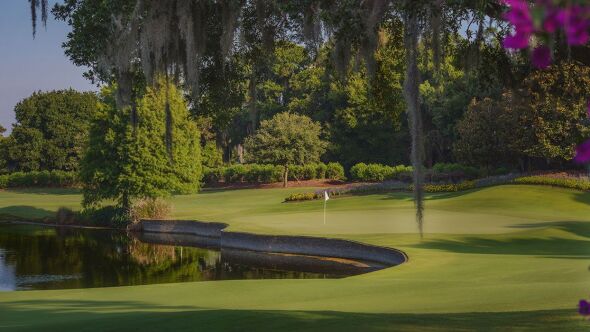
Your approach to the 8th at Grand Cypress New needs to cross a burn, and you'll drive your cart over a stone bridge toward the green. Kitschy? Sure, but chalk it up to commitment to a certain aesthetic. Photo submitted by TimGavrichGP on 08/31/2018
-
Photo submitted by merbicide on 07/18/2017
-
Photo submitted by merbicide on 07/18/2017
-
Photo submitted by merbicide on 07/18/2017
-
New Year's Day @ Grand Cypress Photo submitted by DAB4par on 01/13/2016
-
Photo submitted by Deziner1 on 04/24/2015
-
Photo submitted by PJ5957795 on 02/02/2014
-
Photo submitted by KillianGolf on 01/29/2014
-
Photo submitted by adamspop1 on 04/08/2013
-
First Tee Photo submitted by BroncoBilly on 01/28/2013
-
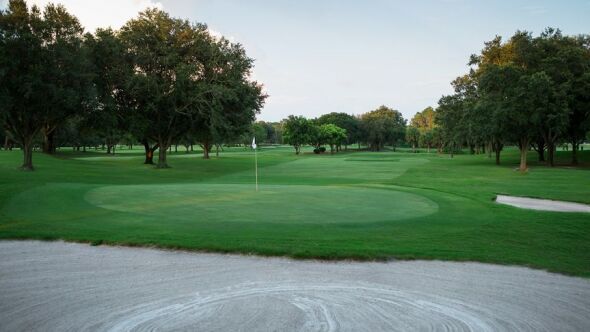
First Green Photo submitted by BroncoBilly on 01/28/2013
-
Photo submitted by jaspermiah on 12/19/2012
-
Photo submitted by pdks on 11/13/2012
-
Photo submitted by pdks on 11/13/2012
-
Photo submitted by pdks on 11/13/2012
-
Photo submitted by pdks on 11/13/2012
-
Photo submitted by pdks on 11/13/2012

reviews were accurate
Despite reviews we tried it anyway because we may never make it to St. Andrews. While the course was fun, the absence of amenity's, and lack of friendly and attentive service made us regret this. There was no staff to greet us when we arrived and parked. Scott later came out after we had unloaded our clubs and was not very friendly. He made a point to tell us we could not take separate carts, since we drove together. We told him we never mentioned taking separate carts and had no plans to do so. Since there is no restaurant, you had to rely on the beverage cart and we only saw him once stationed out on the course, not driving around.
fun course, but that's it !!!
Driving in you would think they were closed with all of the . construction. Resort is undergoing major renovation. There are no amenities due to that.The least they could do is offer good customer service. Scott was not friendly. Did not even smile to greet us. It looked like he did not want to be there. We dealt with him in the beginning and at the end and the result was the same. Will not be back until resort is complete with all the bells and whistles and hopefully some friendly staff.
unique course, no amenities, poor service
First impression was not good, resort under major construction. Scott in golf operation was not friendly, very short with his answers to our questions since wee had not played there before, very condescending. Nice links style course, in good shape. We will pass on this one until construction is complete and is fully staffed with amenities.
fun course, lacks amenities and service
Property is undergoing major renovation. No clubhouse, restaurant, range etc. Only saw the beverage cart once. The guy was literally stationed in place on the course when we came by and we did not see him again.
Awesome Links Track
First time playing the new course having only played the other courses years ago. The course was a treat. It is in immaculate shape and the links style brings a different challenge where you can swing away but have to avoid numerous pot hole bunkers. The greens were perfect and the shared green experience is unique and enjoyable. It wasn’t too busy today so I was able to go out as a twosome and finish in 3 hours. One thing I strongly hope they consider in the future is using GPS’s on the carts. For this kind of course that is essential as a lot of the pot hole bunkers are hidden and the greens are elevated. The course is clearly undergoing significant renovations as all practice facilities are closed and you pass a ton of construction on the drive in and the ride to the first hole. But aside from that, it is truly a gem. I look forward to seeing what it looks like when it’s all finished. I will certainly be back.
enjoyed the course but that't it
Driving in everything is under construction. Cart attendant was not friendly. Initially said we could not take separate carts, even though we drove separately. He did finally give in reluctantly. I wanted to get his name to follow up with the pro, but he did not even have a name tag. Heavy set older gentleman with southern accent. It took us longer than usual to play, because there were some holes we did not know where we were going. That same cart attendant insinuated that we must have played extra holes since it took us so long. No clubhouse, no restaurant, no practice facility, no gps.
course nice, amenities and service not so much
Entire property except for course is under construction. Fun lynx course, can hit it anywhere. No amenities whatsoever. Teed of around 11 and only saw the beverage cart once. Later found out inadvertently from fellow staff member he had to leave for his other job. Will not return until construction is complete in 2023.
fun course but thats it
Driving in you would have thought they were closed. Upon arrival we were met by Scott outside. He was not very friendly. Gave us a hard time when we wanted to take separate carts due to virus. Which was surprising since we came in separate cars.Our pace was slower than normal since we were not sure where to go on some of the holes. Scott insinuated that we must have played extra holes since it took us so long. No amenities. Will not be back until resort is truly open!!!
Unique course, but
Played with a group of guys from all over the US. This course was one of many we played in Orlando last week. It was the most expensive and offered the least amenities. Did not even have a restaurant. One of the outside staff members was very unfriendly, I checked with the rest of the guys in our group to make sure it was not me and they all agreed, he did not have a name tag, older heavy set gentleman with southern accent. We will not come back again until resort re opens in a couple of years.
poor customer service
I was surprised at the behavior of one of the outside staff members at this course. It was very out of character for this course, staff are usually very friendly. He was complaining in front of the guests about players wanting to take their own cart, which we all know happens a lot due to the virus. He was also ranting out loud about the discounted green fee a group was paying. One of my buddies even heard him venting to his boss, when he was walking to the restroom in the clubhouse. Surprised restaurant is not open, couldn't even get a ooffee or breakfast sandwich.
Great find in Florida!
I’ve always had a great time at grand cypress and I finally found a good deal for the new course. It was such a cool experience playing this links style golf course! Only problem was the two some who wanted to pass us but we were waiting for a group in front of us.
Love this golf course!
Links Course at it’s best!
My wife an I played the course for the first time und enjoyed it very much. Highly recommend.
Beautiful course, typical links style, wide and shared fairways, challenging green. Pace is a little slow today, if you like links style, it worth to come here to play at least once.
enjoy and embrace the shared greens
links styled golf course with shared greens. hard to miss a fairway even though i did miss 2. it is a hard layout to know where to go...we played the back 9 with someone familiar with the layout and it was a huge help. the front 9 he left and had to figure it out for ourselves. recommend this course especially if you want to experience something different,
Course is tired
I played this course a few years after it opened. It still plays challenging, but needs a refresh.
First impression were the antique rental clubs followed by a range void of practice balls and no attendant. All in all this is just an average public course versus an upscale resort course. Not worth the money
Spectacular course
Great links inspired Jack design with 1 and 18 being a replica of St Andrews. Very friendly staff and great amenities. Pace of play was atrocious and surprisingly no ranger out to move folks along. Still, go play it - it’s a terrific course

Great Course - Fantastic Conditions
This was my first time playing Grand Cypress - New Course. I had a great time and loved the course.
However, it is Very challenging the 1st time playing the course because it is a challenge to know where to go, where is nte next tee, where the holes go, what pin is the correct pin for the hole you are playing (there are more double greens on this course than I have ever seen on one course). .
The condition of the course is fantastic. The fairways are huge and wide. TONS of bunkers all over the course. Many bunkers you can not even see from the tee box. A picture of each hole on the scorecard or a diagram of the hole at the tee box would be VERY helpful, especially for the first time playing the course.
There are pot bunkers off every tee and are difficult to navigate without some type of map or picture of the hole.
The practice area is excellent with large putting greens, great driving range and nice chipping and pitching area.
The greens are huge and are in fantastic condition with LOTS of humps, undulations and levels within each green.
Top 5 course in Orlando
What a great course. this place is always manicured to perfection. The greens are challenging but the course is fair. Always a highlight of our trip to Orlando.
Staff overwhelmed, short on carts. Not a good day
Played on Friday "in season" as part of a package via Hyatt Grand Cypress hotel. Good weather, good course conditions, and a totally excellent stay at the HGC. But we chose wrong when we picked a 1:30 tee time on Friday at Grand Cypress New Course. Seems this course sends people out from both 1st and 10th tee in two loops during the day and they didn't have enough carts for all the day's golfers. .
The morning groups were slow finishing, so the afternoon tee times didn't have carts available. We checked in at 12;45 (i.e. 45 minutes early) yet the starter told us to join our 4-some in the first fairway because we were "late to the tee."
Why were we late to the tee? Because we were waiting for the crew to let us have a cart - and they weren't communicating with the starter at the New Course (maybe only at N/E/S). We had been on the putting green and waiting for the cart for 50+ minutes. So while the course was adequate enough, I'd recommend calling ahead and NOT playing if they expect to be busy.






Orlando Buddy Trip Golf Package

Arnold Palmer’s Bay Hill Club & Lodge Stay & Play Package

Omni Orlando Resort At Championsgate Stay & Play Package

Orlando Getaway Golf Package